Our vision is to populate the Lemonade Valley planting area with native, mixed tree and understory species such that it connects all native vegetation areas into a continuous, healthy ecosystem across the Title and (re)introduce native fauna
The Planting Project is located within a Property Title area of 311 ha, held by Gregory McNeil. The land has been part of the farm established by Greg’s grandfather in the 1920s after he came back from WW1. The landscape is a mix of remnant vegetation, granite outcrop and agricultural land.
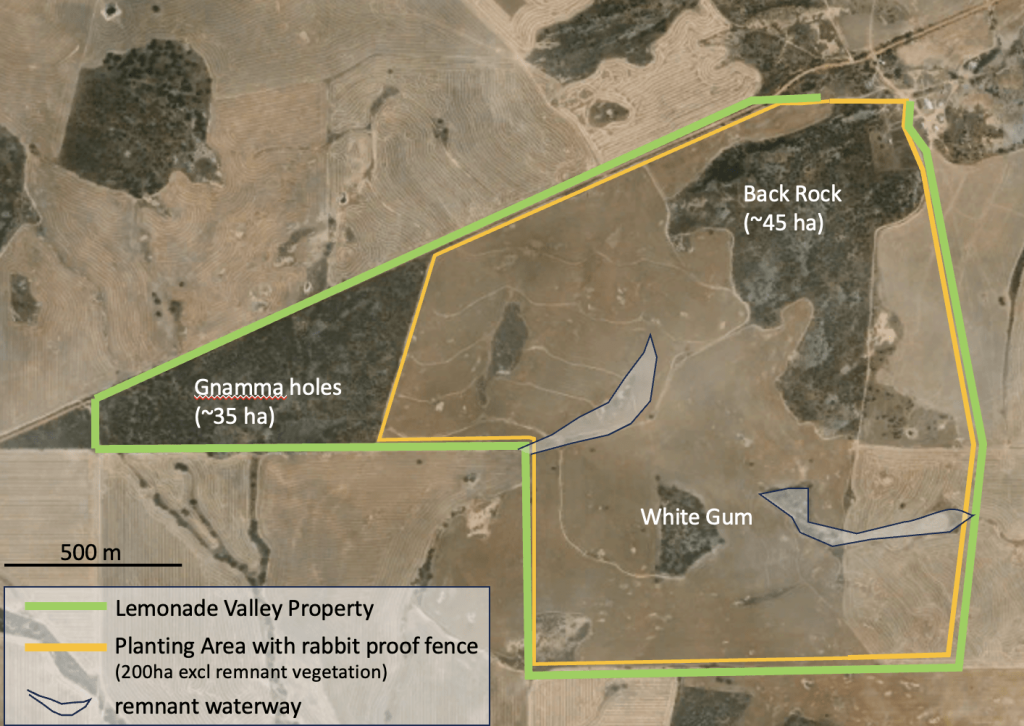
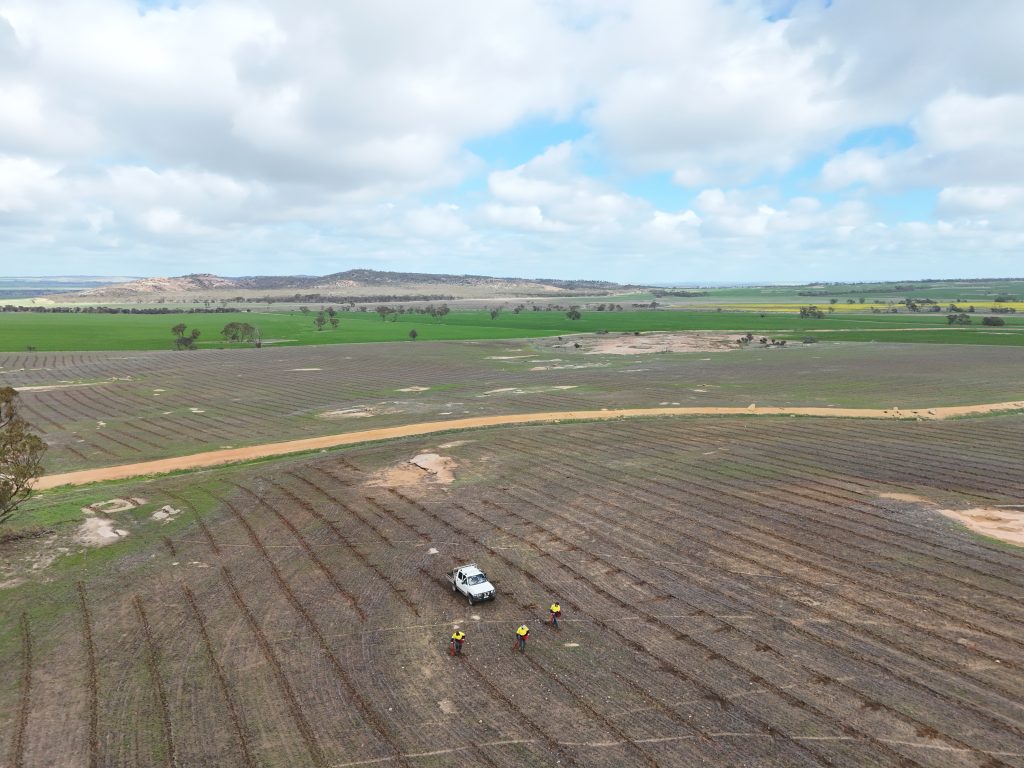
Agricultural land within the Title comprises 200 ha; it was cleared some 100 years ago and has been cropped since. This part is now under a native revegetation/carbon farming scheme (Mallee planting, ERF 193572). The planting area surrounds some areas of rocky outcrops and native vegetation, the largest of which is called White Gum.
The Lemonade Valley Property includes two larger areas of native vegetation, which consist of near-original, multi-storey bushland and granite outcrop. These areas are called Gnamma Holes, app. 35 ha adjacent to the West of the Project Area and Back Rock, app 45 ha, adjacent to the northeast and enclosed by the Planting Area (see the map below).
The broader vision for the Property is to populate the planting area with native, mixed tree and understory species such that it connects all native vegetation areas into a continuous, healthy ecosystem across the Property. This includes the restoration of two remnant water ways and the support and reintroduction of native fauna.
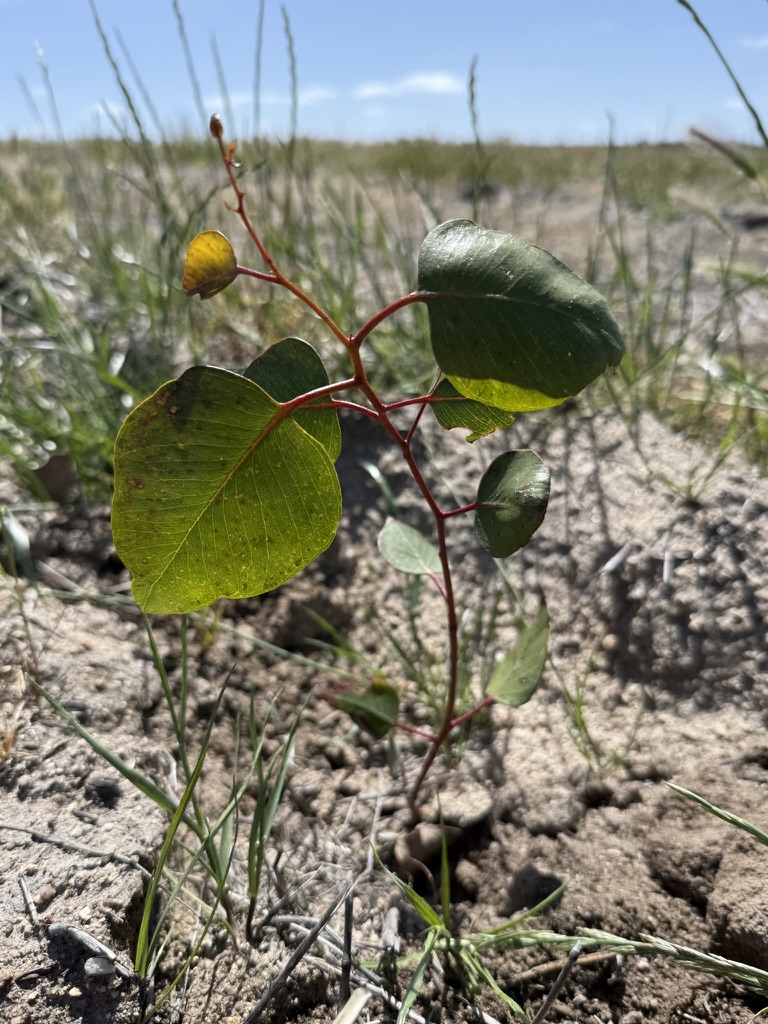
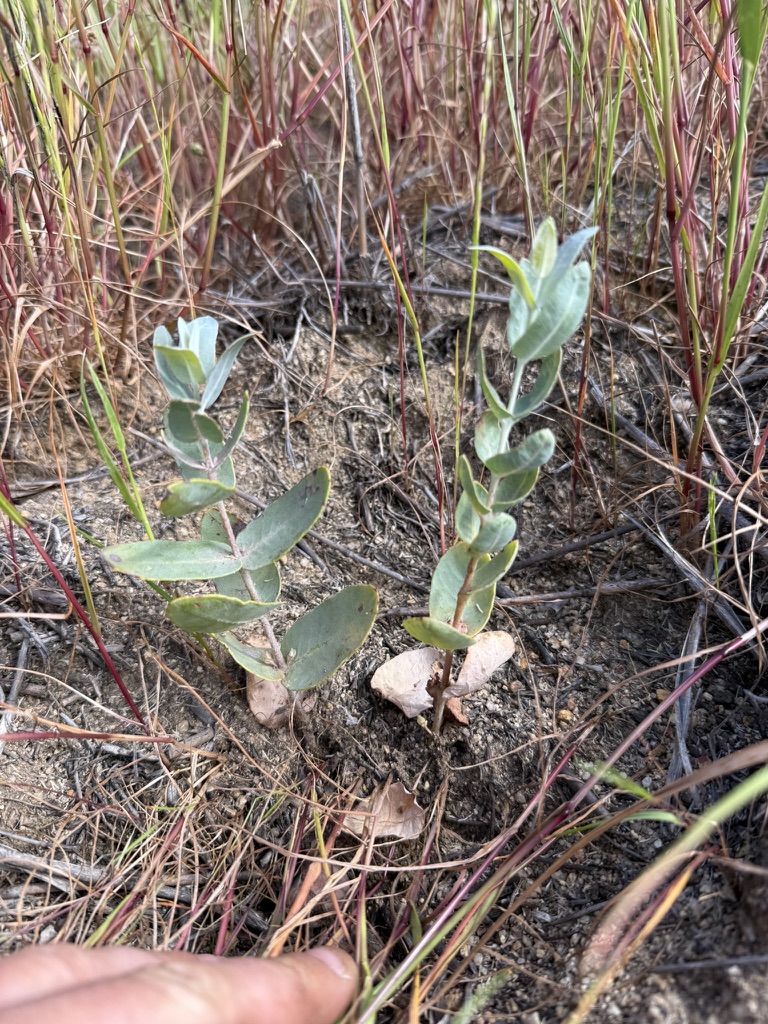
The mixed species tree planting includes endemic Leptospermum Nitens, which also occurs naturally in the remnant bush areas. These trees are from the same genus as the more widely known Manuka trees (Leptospermum Scoparium) that underpin the New Zealand bio-active honey industry. Similarly, bees produce bioactive honey with the nectar from the
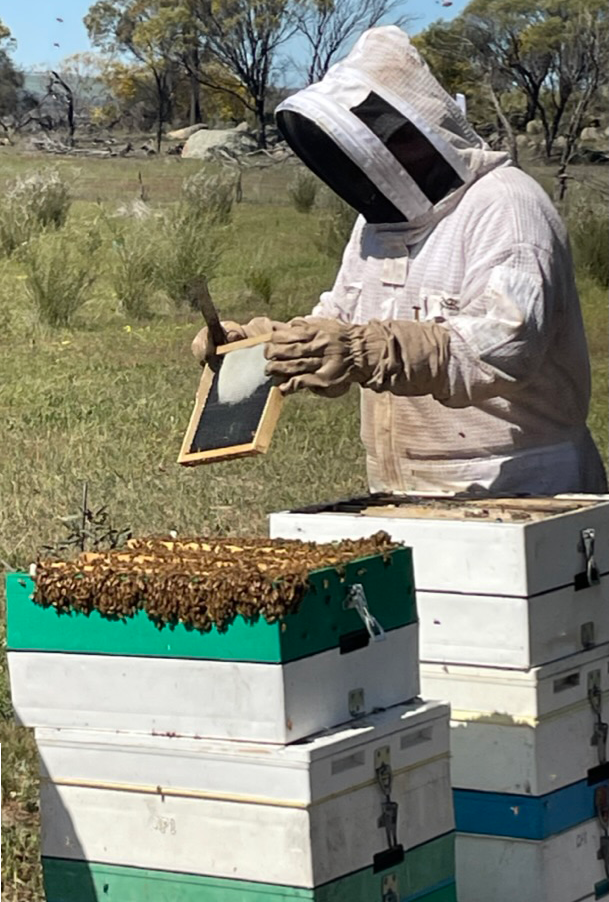
L. Nitens. Bio-active honey was harvested successfully on the property, both from clusters of wildstands as well as trial plantings. The Planting Project will thus enable the generation of an alternate income stream. If this combined honey/carbon farming model proves economically attractive then it may encourage other landholders to do the same on parts of their property that are of limited interest to broad-acre farming (e.g. poorer soils, rocky grounds).
Supporting resilient ecosystems and native wildlife, including endangered species.
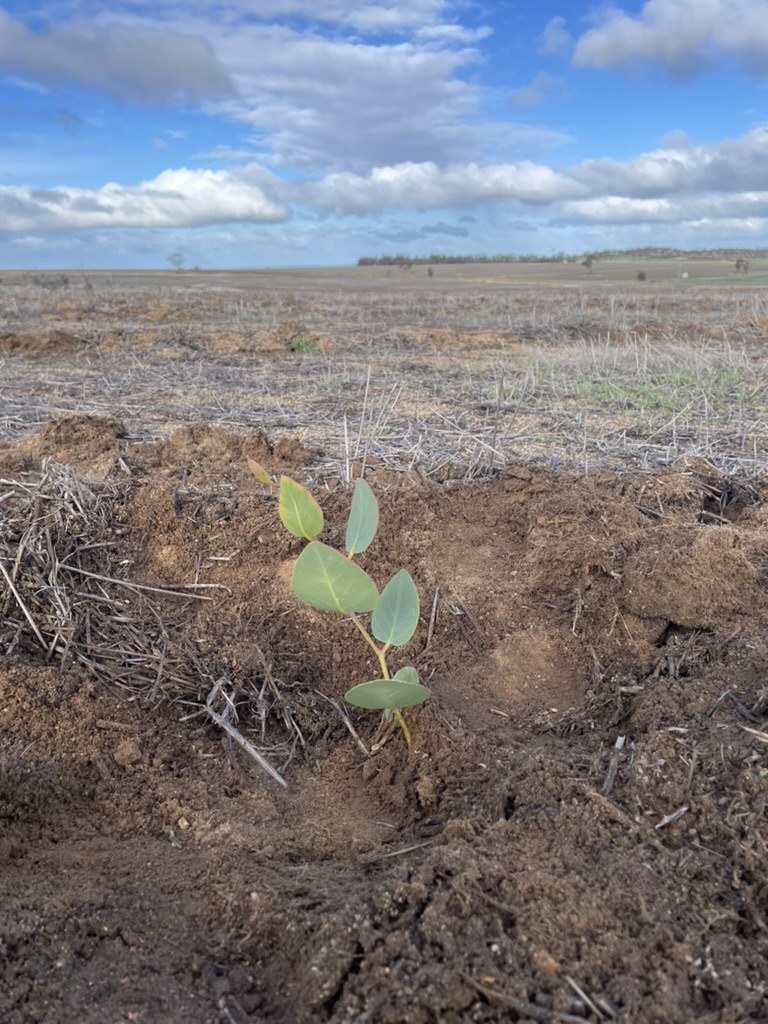
Know more about the fencing and initial direct seeding completed.
The main risks to the permanence period and their mitigations summarised.
Project Type: Australian Carbon Credit Unit (ACCU) Scheme project registered under the Carbon Credits (Carbon Farming Initiative) Act 2011
Method: Carbon Credits (Carbon Farming Initiative) (Reforestation by Environmental or Mallee Plantings—FullCAM) Methodology Determination 2014
Project ID, Name: ERF193572, Lemonade Valley Planting Project
Date of Registration: 21/06/2024
Forward abatement estimate: 29,000 tCO2e (ACCUs)
Crediting period: 25 years
Permanence period: 100 years

Australian Carbon Credit Unit (ACCU) Scheme project registered under the Carbon Credits (Carbon Farming Initiative) Act 2011
Stay Informed and Get Inspired. Subscribe for the latest news, tips, and offers.
© 2025 Lemonade Valley Planting Project • All Rights Reserved