
Enclosed within the Planting Project
The Planting Area covers 200 ha and consists of former broad acre cropping land (wheat & sheep production) and remnant bush or granite outcrop.
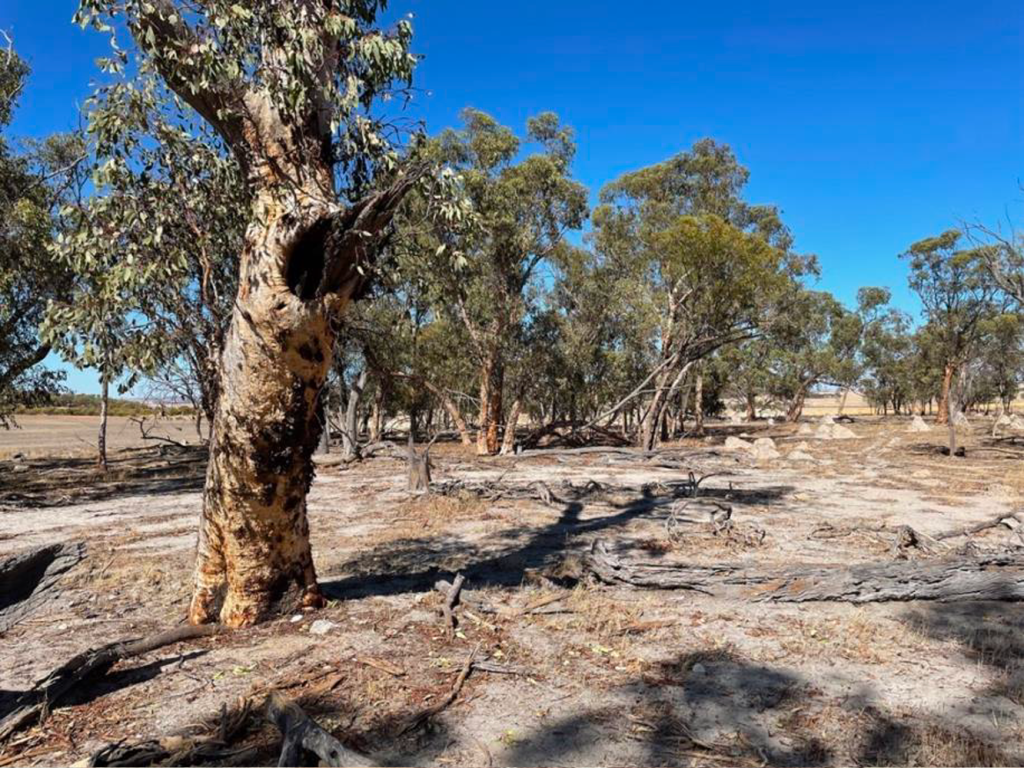
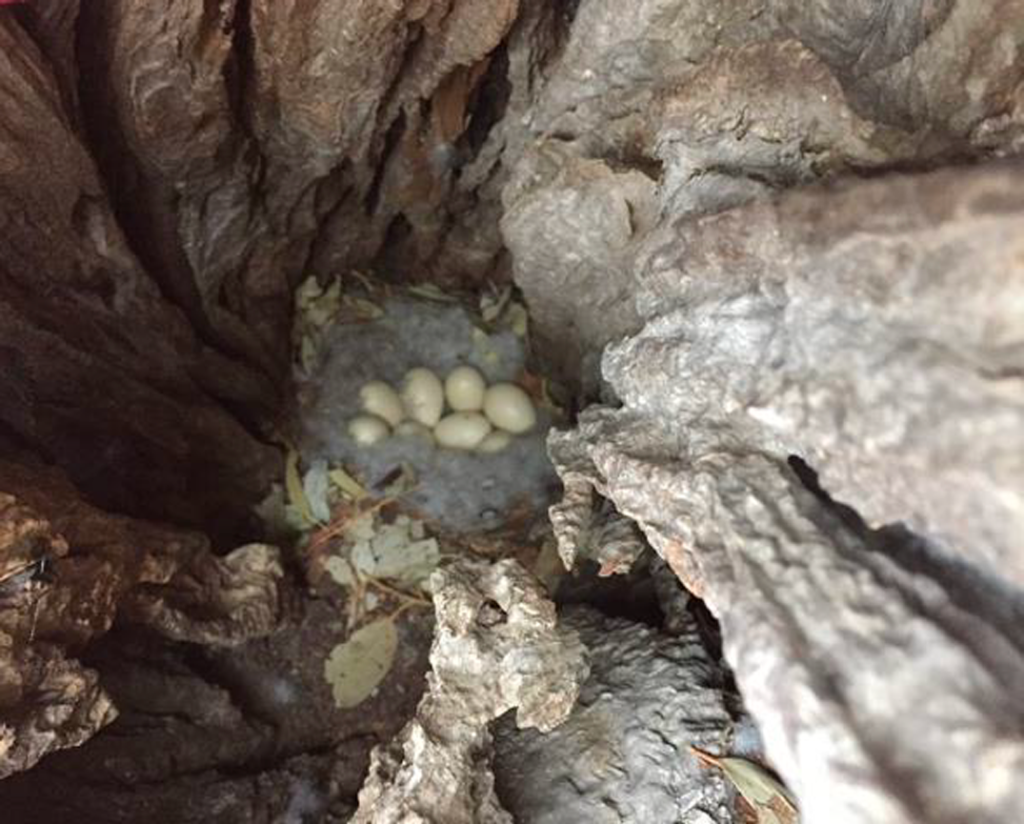
A significant bush area fully contained within the overall Project area is called White Gum. This area measures app 4.6 ha and consists of remnant, single-storey bush land with the dominant tree species the White Gum (E. wandoo), York Gum (E. loxophleba ssp loxophleba) and few other species. Animals appear to be limited to nesting birds (parrots, duck). The area has suffered from stock grazing (sheep) of the understory over the years.
A further two areas of note are remnant waterways. In the wet season these form a conduit for water run-off. They contain remnant timber and grasses.
The aim for these native vegetation areas is to:
Adjacent to the Planting Project
Gnamma Holes
The area on the property adjacent to the West of the Planting Project is called Gnamma Holes and consists of some 38 ha of near-original multi-storey woodland and granite outcrop; the dominant tree species are York gum, rock sheoak and jam trees/acacias.
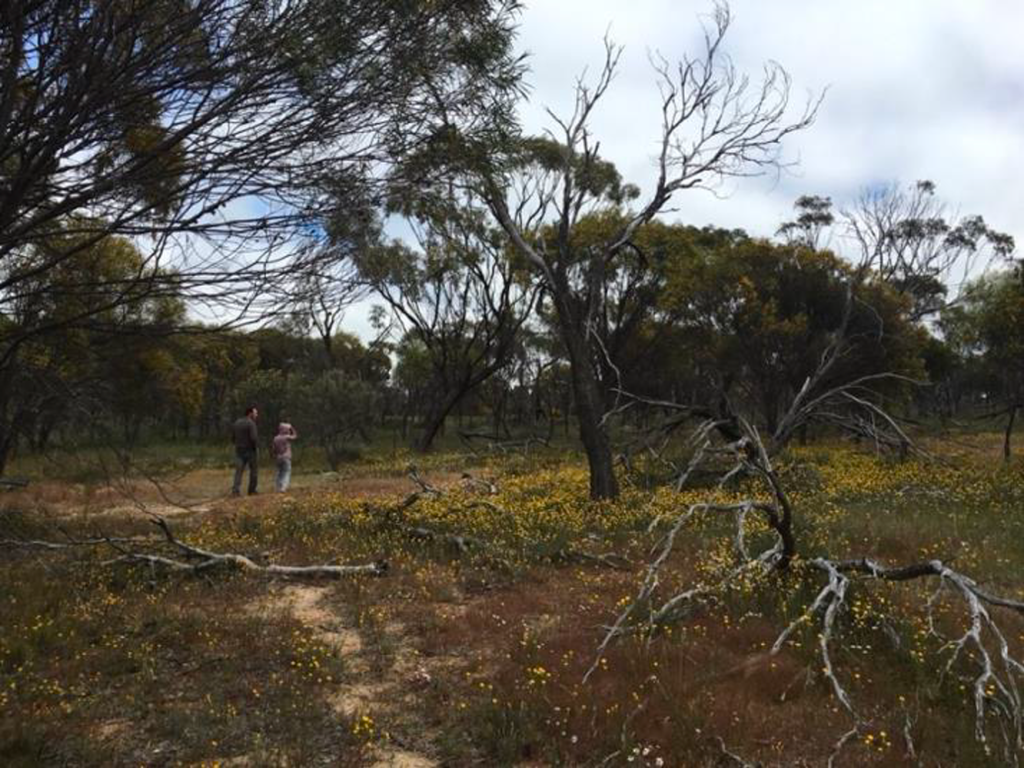
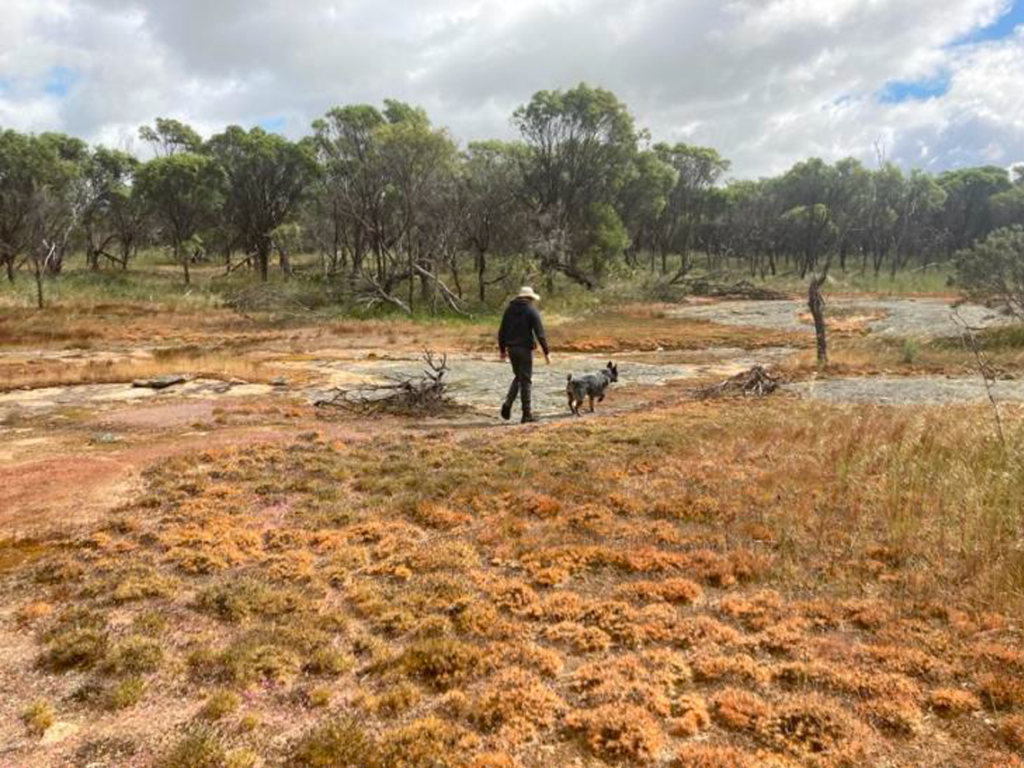
Other trees/shrubs include hakea and various native grasses and weeds, as well as wildflowers including occasional donkey orchids. There is a large granite outcrop that collects water in shallow puddles in the wet season, in which tadpoles mature. Drainage is via a seasonal waterway.

Back Rock
The area on the property adjacent to the northeast of the Planting Project measures some 45 ha and consists of multi-storey bushland including granite outcrop; the dominant tree species are rock sheoak and acacia (jam tree).
Both Gnamma Holes and Back Rock house various native animal species, including parrots, wallabies, kangaroos, echidna, frogs and lizards, as well as ferals (rabbit, fox, cat).
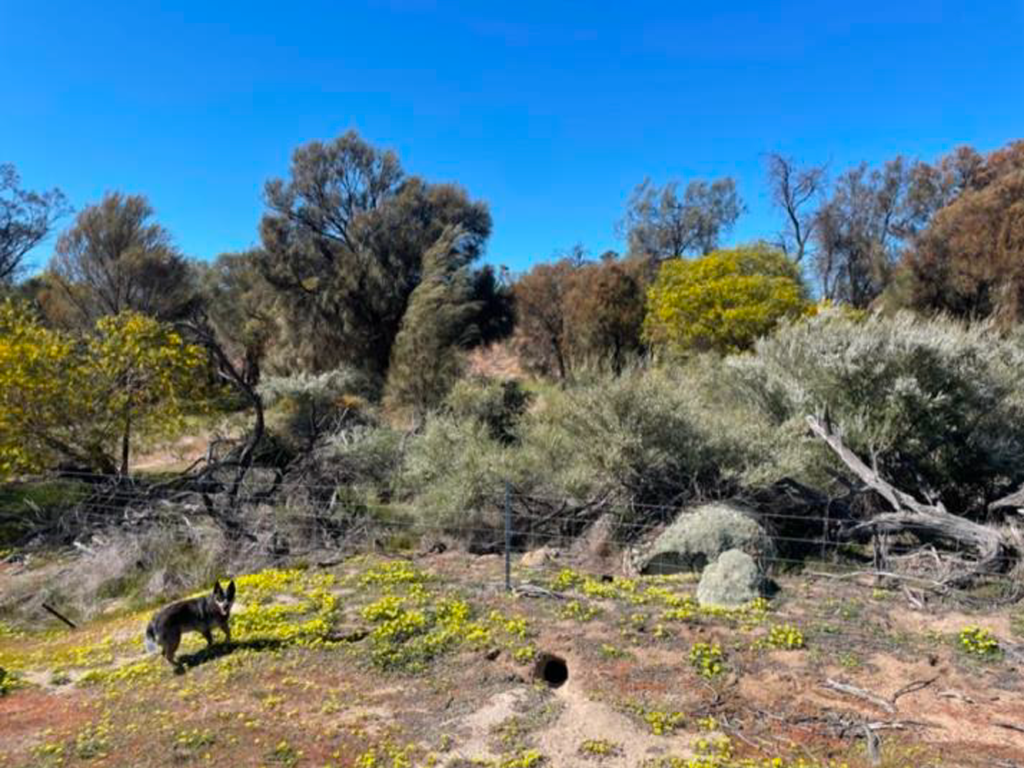
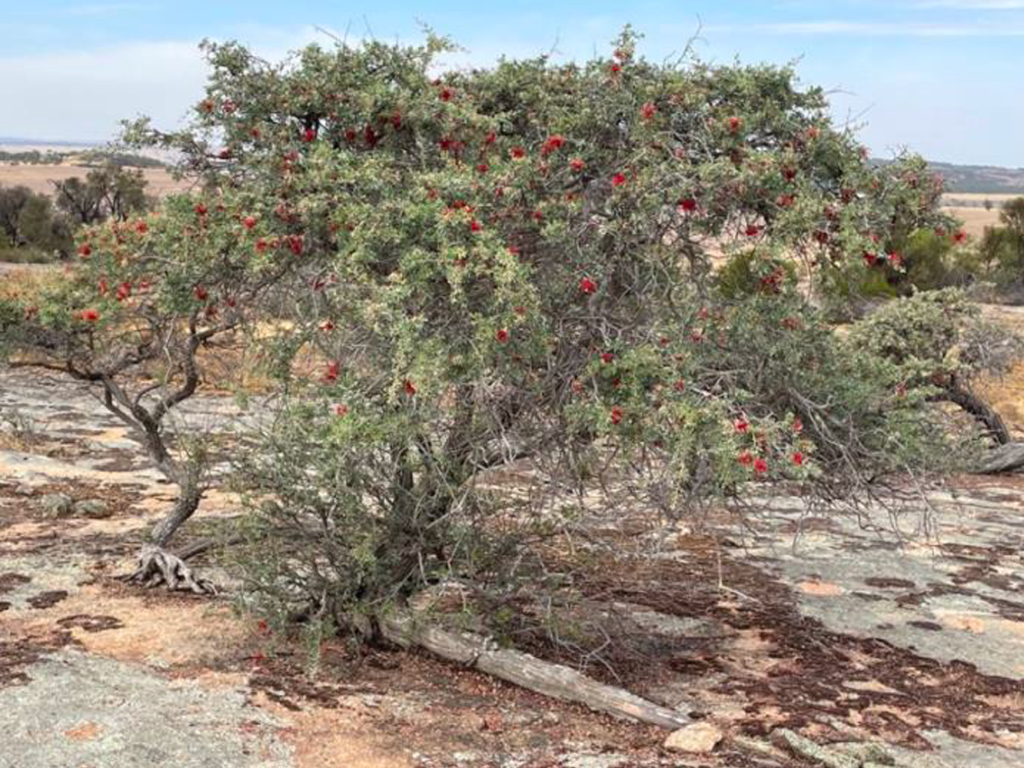
The occasional black-flanked rock wallaby, an endangered species, has been spotted on Back Rock. This species is known to live in the nearby Mount Caroline Nature Reserve – one of about half a dozen sites where the rock wallaby can be found in the Wheatbelt. The rocky outcrops where they live are surrounded by crop fields, so they have become islands in a desert of habitat. The Revegetation Project will add to their habitat.
The aim for these native areas is to:
Australian Carbon Credit Unit (ACCU) Scheme project registered under the Carbon Credits (Carbon Farming Initiative) Act 2011
Stay Informed and Get Inspired. Subscribe for the latest news, tips, and offers.
© 2025 Lemonade Valley Planting Project • All Rights Reserved